Free Shipping on Orders Over $49.99 within the US*


Rotating car seats have gone from being a niche baby gear feature to something many parents seriously consider when building their everyday setup. And honestly, it makes sense. The idea is simple but very appealing: instead of leaning into the back seat at an awkward angle, you rotate the seat toward the door, place your child in more easily, buckle them comfortably, and turn the seat back into travel position. For tired parents, busy mornings, and active toddlers, that sounds pretty great.

So, are rotating car seats worth it in 2026?
For many families, yes. They really can be worth it. But the reason is not that they magically make every car ride better or that they automatically replace every traditional car seat option. They are worth it when the swivel feature solves a real everyday problem for your family. That might be back strain, awkward loading in a taller vehicle, a heavier toddler who fights every buckle, or simply the fact that you are in and out of the car constantly and want the routine to feel easier.
That is the part that matters most in real life. Parents are not just choosing a product. They are choosing a routine they will repeat over and over again for months or years. If a rotating seat makes that routine smoother, less awkward, and more comfortable, it can be one of those baby gear decisions that feels genuinely helpful long after the excitement of buying it wears off.
At the same time, not every family needs one. Some parents are perfectly happy with a traditional infant car seat or a standard convertible seat. Others love the flexibility of a rotating model and quickly wonder how they ever managed without it. The best answer is not one-size-fits-all. It depends on how you live, how often you drive, what stage your child is in, and what makes daily life easier for you.
What is a rotating car seat?
A rotating car seat, sometimes called a swivel car seat, is designed to turn toward the car door so you can place your child into the seat more directly. Once your child is buckled in, the seat rotates back into the proper travel position.
It sounds like a small design detail, but it changes the loading experience quite a bit. Instead of reaching deep into the car and twisting your shoulders while trying to adjust straps and position a child correctly, you can work from a much more natural angle. That may not sound dramatic at first, but a lot of parents notice the difference very quickly.
This is especially true during the rear-facing years. Rear-facing is the stage when loading often feels most awkward for adults. Babies need careful harness positioning, toddlers are bigger and less cooperative, and parents are often working around tight parking spaces, diaper bags, coats, and a child who has suddenly gone boneless at exactly the wrong moment.
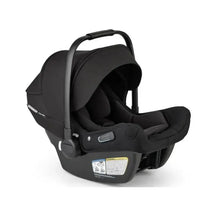
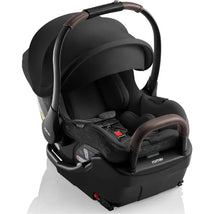
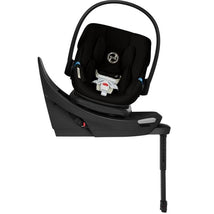
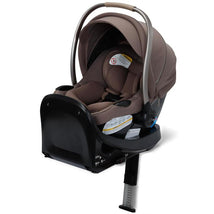
In 2026, rotating car seats are firmly part of the premium car seat conversation. Within MacroBaby’s current assortment, parents shopping this category will most commonly find rotating options from Nuna, Cybex, and Maxi-Cosi. That makes the topic very relevant for families comparing real products they can actually buy, not just theoretical options.

Why parents are so interested in rotating car seats
The short answer is convenience, but that word does not fully capture it.
Convenience can sound optional, almost like a bonus feature. In reality, this kind of convenience often becomes part of what makes the day feel manageable. A common situation is loading your child into the car while parked close to another vehicle. Another one is trying to buckle a child into a fixed seat in a taller SUV while holding a bag and keeping an eye on a second child nearby. Then there is the everyday version of it, which is simply doing the same awkward movement several times a day until your back and shoulders are tired of it.
This is where rotating car seats really make sense. They are designed around daily use. Many parents notice that the swivel feature does not just feel fancy. It feels practical, especially when life is rushed, messy, and repetitive in the way parenting often is.
A lot of families also become more interested in rotating seats once their baby turns into a toddler. A small infant is one thing. A determined toddler who arches, twists, and suddenly refuses to sit is something else entirely. At that point, the value of easier access becomes much more obvious.
What matters most when choosing any car seat
Before getting too deep into the swivel feature, it helps to keep the main priority clear. The best car seat is the one that fits your child correctly, works in your vehicle, and is used properly every single ride.
That point is worth repeating because it is easy to get distracted by product features. Rotating seats are helpful, but the rotation itself is not the full story. Proper fit, correct installation, harness use, and stage-appropriate setup still matter most.
This is one reason parents should think beyond what looks impressive on a product page. A seat can have a great feature list and still not be the right match for your car, your child, or your routine. The real goal is not to choose the most talked-about seat. It is to choose the seat you will use confidently and correctly every day.
That said, ease of use does matter too. In real life, a seat that feels easier to access can also feel easier to use well. You can see the harness more clearly, position your child more comfortably, and manage the loading process without the same awkward reach. That is one of the biggest arguments in favor of rotating seats. They can make correct everyday use feel less frustrating.

Are rotating car seats worth it for newborns?
They can be, depending on what kind of setup you want from the start.
For some parents, the newborn stage is all about portability. They want an infant car seat that can move from the car to the stroller and inside the house without waking the baby. That is still a very practical choice, and for many families it makes the early months much easier.
For other parents, the priority is different. They want a seat that stays installed in the vehicle and feels easy to use from day one. In that case, a rotating seat can be very appealing, especially if the specific model is designed for newborn use.
This is where product type really matters. Within the MacroBaby assortment, there are different approaches. The Aton G2 Swivel is especially relevant for parents who like the idea of an infant seat with a rotating function. On the other hand, options like the Nuna REVV, Nuna REVV maxx, Cybex Callisto G 360, Cybex Callisto G 360 Select, and Maxi-Cosi Andi 360 speak more to parents looking at longer-use rotating solutions.
That difference matters in real life. A detachable infant seat serves a different purpose from a rotating convertible or all-in-one seat. One is centered more on portability. The other is centered more on in-car convenience and longer-term everyday use. Neither is automatically better. They simply suit different parenting rhythms.

Are rotating car seats worth it for toddlers?
For many families, this is where the answer becomes much more clearly yes.
Toddlers change the whole experience of using a car seat. They are heavier, more active, and usually much less interested in cooperating than they were as babies. Many parents find that getting a toddler into the car seat becomes one of the most physically annoying parts of the day. Not dangerous, not impossible, just exhausting in a very repetitive way.
This is where a rotating seat can really shine.
A common situation is trying to get a tired or resistant toddler into a rear-facing seat while bent halfway into the car. Another is trying to straighten the harness while the child twists away from you. With a rotating seat, you often have a better angle and more direct access. That can make the entire process feel calmer and less physical.
This is something many parents only fully understand after using one for a while. The child gets bigger, the daily routine gets busier, and suddenly the swivel feature goes from sounding nice to feeling genuinely useful. That is why rotating seats often make the strongest impression during the toddler years.
The biggest benefits of rotating car seats
Easier loading and unloading
This is the most obvious benefit, and honestly, it is the reason most parents consider them in the first place.
Instead of leaning in awkwardly to lower your child into a fixed seat, you turn the seat toward you. That makes it easier to place your child correctly, buckle the harness, check the straps, and rotate the seat back. In real life, that can make a surprisingly big difference.
This is especially helpful when you are in a hurry, dealing with a cranky child, or parked in a tight spot. It is not about making parenting effortless. Nothing does that. But it can make this one recurring task feel much more manageable.
Less strain on the adult
A lot of parents do not talk about this enough, but it matters. Loading a child into a car seat is physical. It happens when you are tired, postpartum, carrying other things, or rushing through a long day. If you are doing that multiple times every day, body strain adds up.
Rotating seats can help reduce some of the awkward reaching and twisting that comes with fixed-seat loading. For parents with back discomfort, shoulder tension, or just general fatigue, that can be a major plus.
This is where the feature starts to feel less like a luxury and more like practical support.
Better day-to-day access during rear-facing use
Rear-facing is important, but it is also the stage that often feels least convenient for adults. You are reaching farther, working from a tougher angle, and dealing with less visibility as your child grows.
A rotating seat can make that stage feel easier to live with. That matters because when something feels more manageable, it tends to fit better into real daily routines. Many parents notice that easier access helps the whole rear-facing process feel less frustrating over time.
Helpful for households with multiple caregivers
Not every family has just one person doing every drop-off and pickup. Grandparents, babysitters, nannies, and other caregivers are often part of the routine too.
In those situations, ease of use becomes even more valuable. A rotating seat can feel more approachable for someone who is not handling the seat every single day. The simpler and more comfortable the loading experience feels, the more confident caregivers often are.
The drawbacks parents should think about
As useful as rotating seats can be, they are not perfect for every family.
One thing to keep in mind is that the rotating category is not just one simple type of seat. Some models are infant seats with swivel functionality. Some are rotating convertible seats. Some are rotating all-in-one designs intended to support more stages over time. That means you need to compare the whole product path, not just the fact that it rotates.
Another important point is that a rotating seat does not replace the exact convenience of a detachable infant carrier if that is something you really value. Parents who love lifting a sleeping baby out of the car in the seat may still prefer a traditional infant setup early on.
There is also the reality that not every family truly needs the swivel feature. If your car is easy to access, your routine is already smooth, and you do not mind loading a fixed seat, you may be very happy with a traditional seat. That is completely valid.
The honest answer is that rotating seats are helpful, but they are not universally necessary.
Which rotating car seats make sense for MacroBaby shoppers in 2026?
If this blog is meant to align with MacroBaby’s current catalog, the rotating car seat conversation should stay centered on the products parents can actually compare there.
That includes the Nuna REVV and Nuna REVV maxx, which are two of the most relevant premium rotating options in the store’s lineup. For parents who are drawn to Nuna, the appeal often comes down to smooth daily usability, a polished feel, and an overall premium experience that many families appreciate once they start using the seat regularly.
It also includes Cybex Callisto G 360 and Cybex Callisto G 360 Select, which bring rotating functionality into a broader all-in-one style conversation. These may appeal to families who are thinking more long term and want a seat that supports multiple stages while still offering the swivel feature that makes daily loading easier.
For parents still focused on the infant stage, Cybex Aton G Swivel and Cybex Aton G2 Swivel are especially relevant because they give that rotating function in an infant seat format. That creates a different kind of convenience, one that may appeal to parents who are not quite ready to move straight into a convertible-style setup.
And it is also important to include Maxi-Cosi Andi 360, since it is part of MacroBaby’s rotating assortment too. That keeps the category discussion accurate and grounded in what shoppers can actually find on the site.
This matters because content works best when it reflects real buying options. Parents reading a blog want useful guidance, not a list of products they cannot actually compare in the store they are shopping.
How Nuna, Cybex, and Maxi-Cosi differ in this category
This comparison should stay balanced because one brand is not automatically the right choice for everyone.
Nuna often appeals to parents who want a refined, premium feel and smooth everyday use. In real life, Nuna tends to attract families who care not just about functionality but also about the overall ownership experience. The seat needs to work well, of course, but it also needs to feel thoughtfully designed every time it is used.
Cybex often appeals to parents who like feature-rich products and a more engineered feel. Rotating options like the Callisto G 360 family may be especially appealing for families who want convenience paired with a broader stage approach. Cybex also tends to stand out for parents who like modern styling and a strong features-first mindset.
Maxi-Cosi often appeals to parents who want comfort-focused design and a family-friendly approach that still feels modern and practical. In this category, the Andi 360 brings another rotating option into the mix for shoppers who want to compare beyond just two brands.
This is where it really makes sense to think about your own routine. Are you drawn to premium simplicity, feature depth, infant-stage flexibility, or long-term use? That question will usually guide you better than trying to choose a universal winner.
Who is most likely to love a rotating car seat?
Rotating car seats are often especially worth it for families who are in and out of the car often, parents with toddlers who are getting heavier, caregivers who deal with back or shoulder strain, and households where multiple adults use the same seat.
They also make a lot of sense for parents who want the rear-facing years to feel easier on a practical level. That alone can be a deciding factor. A feature that helps the adult every single day is not small. It can shape how manageable the whole routine feels.
A lot of families only realize this after using a rotating seat for a while. The biggest benefit is not always flashy. Sometimes it is just that daily loading feels less frustrating, and that ends up mattering a lot.
Who may be just as happy with a non-rotating seat?
Some families do not need the swivel feature as much as they expect.
If you love the portability of a traditional infant seat during the newborn months, that may still be the best fit for your life. If your current vehicle setup already makes loading easy, the benefit of a rotating seat may feel smaller. And if your routine is simple and you are comfortable with a fixed seat, you may decide a traditional convertible or infant car seat is more than enough.
That does not mean rotating seats are overhyped. It just means they solve specific problems, and not every family has the same problems.
The best decision usually comes from imagining your real week, not just the shopping moment. How often are you driving? Who is loading the child? How tight is your parking situation? Is buckling calm or chaotic? Those are the questions that lead to the right answer.
Where to compare rotating car seats
Macrobaby is the largest baby store in the USA, and that matters when parents are comparing premium baby gear categories like rotating car seats. Families can visit the physical store in Orlando to see seats in person, compare how different rotating models feel, and get help understanding which option may fit their child and routine best.
There is also an online store, which is helpful for parents who prefer to shop from home, along with fast shipping and expert support both in-store and online. That combination can make a real difference because car seats are not the kind of product most families want to choose blindly.
This is one of those categories where support really matters. Reading product details is helpful, but seeing how a seat rotates, comparing stages, and talking through your daily routine can make the decision feel much clearer.
So, are rotating car seats worth it in 2026?
For many families, yes.
They are worth it when easier loading, less awkward movement, and a more comfortable daily routine would make a noticeable difference in your life. They are especially appealing during the rear-facing and toddler years, when loading a child into the seat becomes more physical and more repetitive.
But they are not automatically necessary for everyone. A rotating car seat is a useful feature, not a requirement. The right choice still depends on your child, your vehicle, your routine, and the type of convenience that matters most to you.
That is the most honest answer. For the right family, a rotating seat can feel like one of the best everyday upgrades in baby gear. For another family, a traditional setup may work beautifully and never feel limiting at all.
What matters is choosing the seat that makes your actual life easier and helps you use it confidently every day.
Conclusion
Rotating car seats are not just a trend. They have become an important category because they solve a very real everyday parenting problem: the awkward, repetitive process of getting a child in and out of the car.
For many parents, that practical improvement is exactly what makes them worth considering. The swivel feature can help with access, reduce strain, and make daily use feel smoother, especially as children get older and the routine becomes more physically demanding.
If you are shopping through MacroBaby, the most relevant rotating seat conversation in 2026 includes Nuna, Cybex, and Maxi-Cosi, with options that cover different stages and family needs. That gives parents a useful, realistic set of products to compare without drifting into brands or models that do not match the store’s actual assortment.
In the end, rotating car seats are worth it when they fit the way your family really lives. And that is usually the best test for any baby product.
FAQ
Are rotating car seats worth it for everyday use?
Yes, for many families they are. The biggest value usually comes from easier loading and unloading, especially when the seat is used several times a day.
Are rotating car seats good for toddlers?
Very often, yes. Many parents feel the benefit most during the toddler stage, when children are heavier, more active, and less cooperative during buckling.
Can I use a rotating car seat from the newborn stage?
Some rotating seats are suitable from the newborn stage, while others are better suited for later stages. It depends on the specific model and the type of setup you want.
Which rotating car seats are most relevant for MacroBaby shoppers?
The most relevant rotating car seats in MacroBaby’s current assortment include Nuna REVV, Nuna REVV maxx, Cybex Callisto G 360, Cybex Callisto G 360 Select, Cybex Aton G Swivel, Cybex Aton G2 Swivel, and Maxi-Cosi Andi 360.
Is Nuna or Cybex better for rotating car seats?
Neither is automatically better. Nuna often appeals to parents who want a refined premium feel, while Cybex may appeal more to families looking for a feature-rich experience or broader stage use.
Does MacroBaby carry rotating car seat options besides Nuna and Cybex?
Yes. In addition to Nuna and Cybex, MacroBaby also carries the Maxi-Cosi Andi 360 as part of its rotating car seat assortment.
Should I choose a rotating seat instead of a traditional car seat?
It depends on your routine. If easier access and less physical strain would make daily life noticeably better, a rotating seat may be worth it. If your current routine already feels easy and you prefer a simpler setup, a traditional seat may still be a great fit.